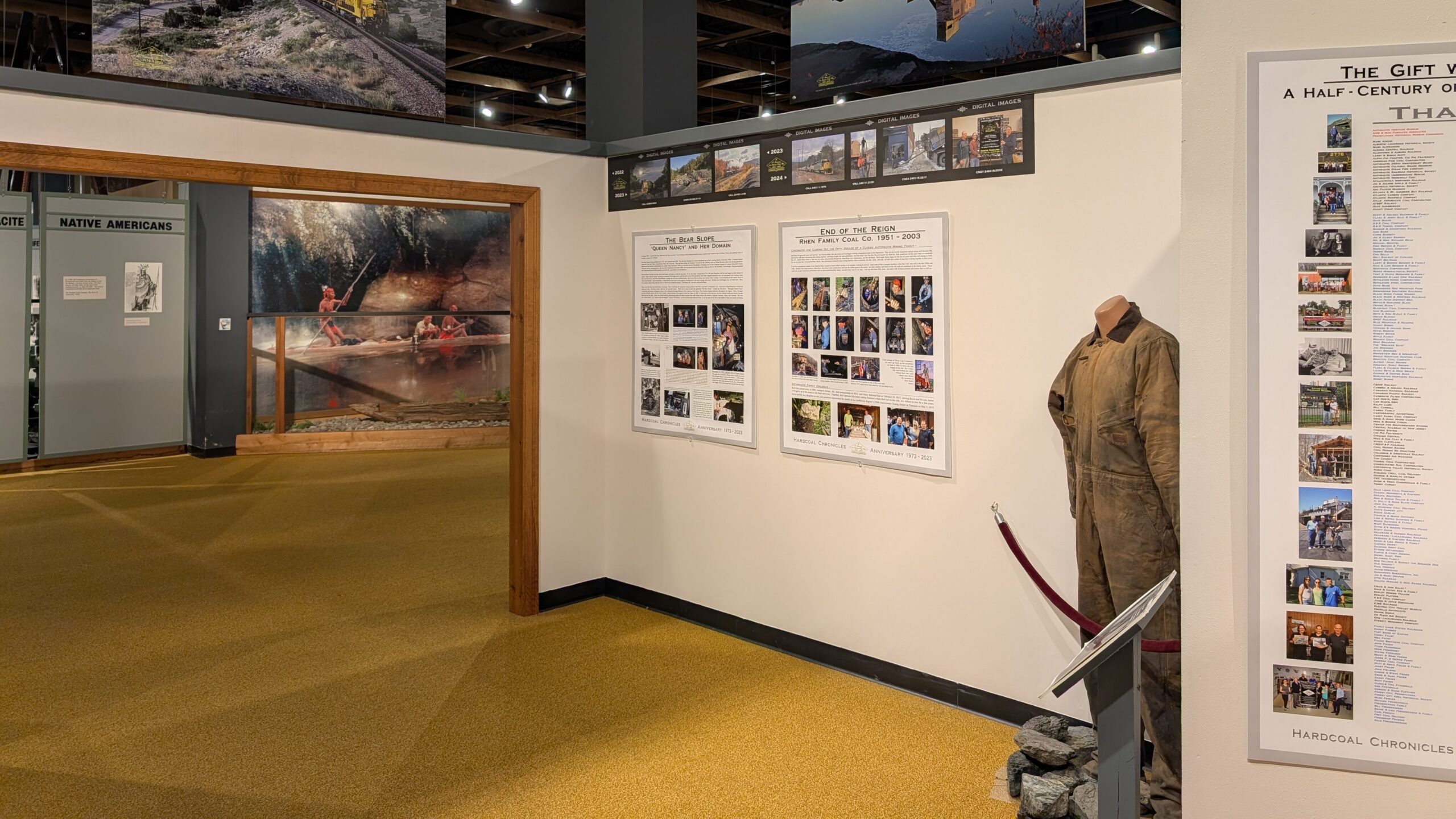
In 1986 a young photographer named Scott Herring bought a fateful admission ticket to the Anthracite Heritage Museum. On that day, Scott met with an equally young curator Chester J. Kulesa who encouraged him to continue his documentation of the modern anthracite mining industry and create a collection that could become a resource for future scholars. Mr. Herring’s unique understanding of the landscape, his authenticity, and ability to earn the trust and respect of anthracite miners, forged a fifty year project to capture the last vestiges of a then rapidly declining industry. Scott would become the most prolific anthracite photographer with over 288,000 images taken of all aspects of our region.
Scott’s passion for the people, places, and culture of a region led to him to document the remaining elements of the 250 year-old American industry. His work aligned well with the Anthracite Heritage Museum’s mission. Both Scott and the museum sought to document and preserve the legacy of the anthracite coal industry and those who came here to work in and live by its mines. While the museum concentrated on the legacy of the anthracite industry, Scott forged ahead to record the modern industry and what remained of its once unprecedented scale. This juxtaposition of historic and modern is of deep value to the scholars, visitors, and students who engage the museum and Scott’s commitment to understand and preserve the unique development, complexities, and culture in our region.
The Anthracite Heritage Museum and Scott forged a documentation partnership of over fifty years which culminated in exhibitions at the museum in 1996 and 2013 for his 20th and 40th anniversaries, and 2019 for the Anthracite Photographers: Photographers of Anthracite show. 2023 marked the 50th anniversary of Scott’s journey to document our region.